
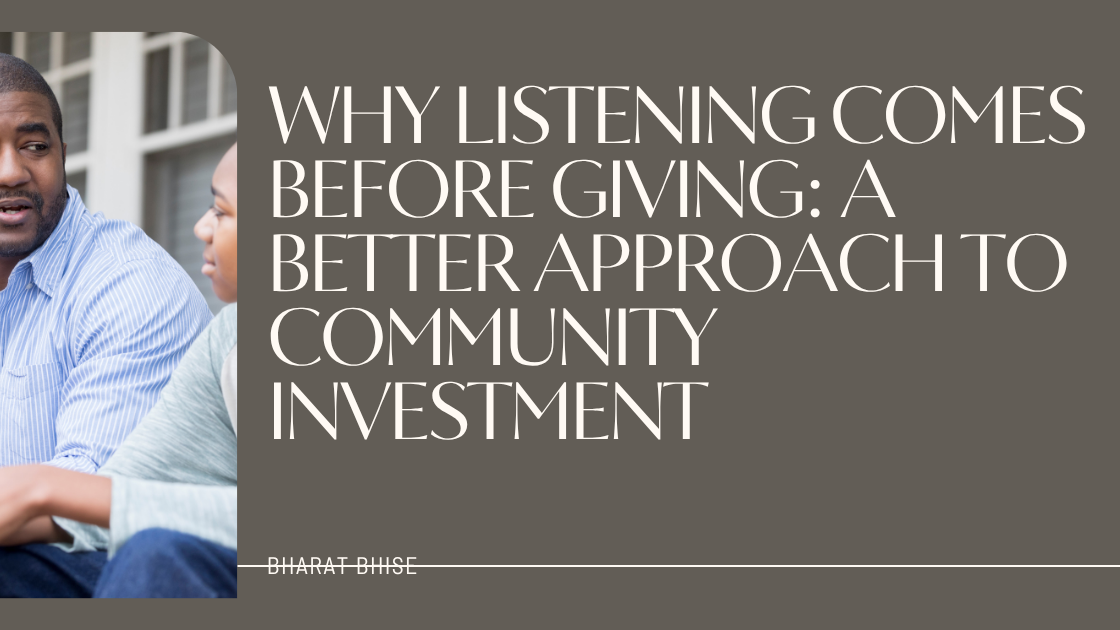
Community investment is often associated with donations, funding programs, or providing resources to organizations that need support. While financial contributions can create meaningful opportunities, money alone does not guarantee meaningful impact. The most effective community initiatives often begin with something much simpler: listening.
Before deciding what a community needs, businesses, nonprofits, and other organizations can benefit from understanding what residents already know, experience, and value. Listening creates the foundation for investments that are relevant, practical, and capable of producing lasting results.
Understanding the Real Needs
Outside organizations may have good intentions but limited knowledge of the challenges within a particular community. A problem that appears obvious from the outside may not be the issue residents consider most urgent.
Listening provides a clearer picture.
Community members can identify barriers, opportunities, and priorities that may not appear in reports or statistics. Conversations with local leaders, families, educators, entrepreneurs, and organizations can reveal important details about what is actually happening on the ground.
This information helps investors direct resources toward solutions that address genuine needs rather than assumptions.
Moving From Giving to Partnership
Traditional philanthropy can sometimes create a one-way relationship: one organization provides resources while another receives them. A more collaborative approach treats community members as partners rather than recipients.
Partnership changes the conversation. Instead of asking, “What can we give?” organizations can ask, “What can we build together?”
That shift can lead to stronger programs because people who understand local conditions are involved in shaping the solution. Community members can contribute knowledge, connections, experience, and ideas that make an initiative more effective.
Building Trust Before Measuring Results
Trust is one of the most important ingredients in successful community investment, and it cannot be created through a single donation.
Consistent listening demonstrates that an organization values local perspectives. When people see that their feedback influences decisions, they are more likely to participate and engage.
Trust also creates better communication. Communities may be more willing to discuss difficult problems, explain why previous initiatives failed, or suggest alternative approaches. These insights can help organizations avoid repeating ineffective strategies.
Making Investment More Relevant
Listening can also improve the efficiency of community investment. Resources are limited, so understanding priorities can help organizations focus their efforts where they can make the greatest difference.
For example, a company may initially believe that providing financial assistance is the best solution. Community conversations might reveal that access to training, transportation, childcare, technology, or mentorship is a more significant barrier.
The investment has not necessarily become larger. It has simply become more informed.
Creating Long-Term Impact
Effective community investment should not end when the initial funding runs out. Sustainable impact requires solutions that communities can maintain, adapt, and eventually strengthen themselves.
Listening throughout the process makes this more achievable. Regular feedback allows organizations to understand what is working, identify unexpected challenges, and adjust their approach.
It also gives communities a greater sense of ownership. When people participate in designing an initiative, they are more likely to see it as something they helped create rather than something imposed from outside.
A Better Starting Point
Giving will always have an important role in supporting communities, but effective investment requires more than generosity. It requires curiosity, humility, and a willingness to understand before acting.
The strongest community initiatives often begin not with a check, a campaign, or a predefined solution, but with a conversation.
Listening does not replace giving. It makes giving more thoughtful, targeted, and sustainable.
When organizations take the time to understand communities before investing in them, they move from simply providing resources to building meaningful partnerships. And when investment is guided by the people it is intended to serve, the possibility for lasting impact becomes much stronger.