
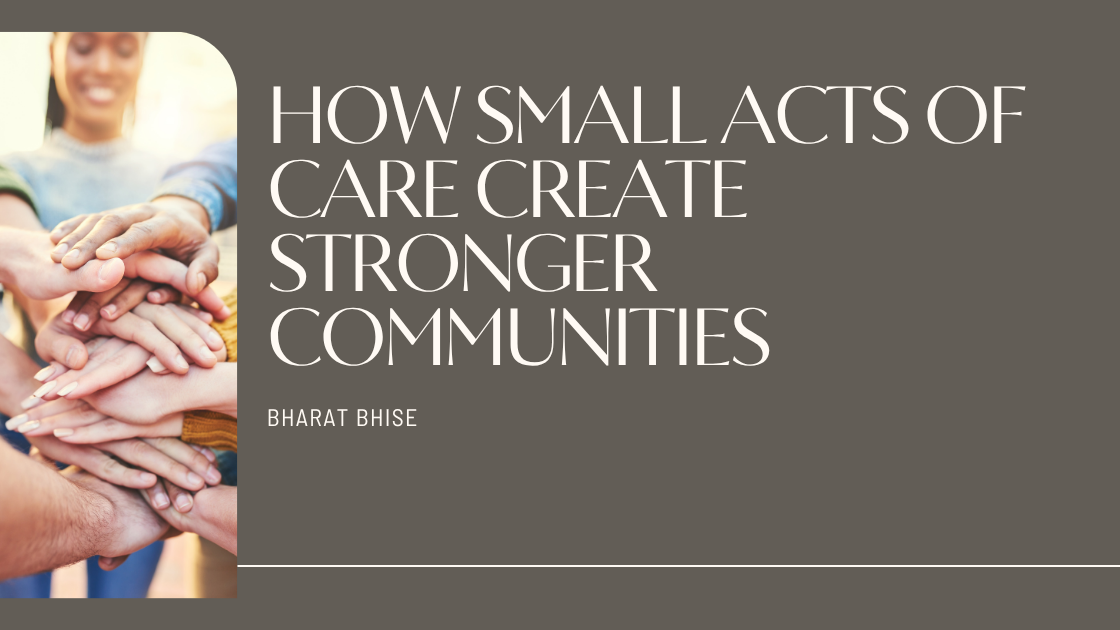
Strong communities are not built overnight, and they are not created only through large initiatives or major events. More often, they are shaped quietly through everyday moments of kindness and care. A simple greeting to a neighbor, helping someone carry groceries, checking in on a friend, or offering support to a stranger might seem small in isolation. But when these actions are repeated across a community, they create something powerful: trust, connection, and belonging.
Small acts of care are often underestimated because they do not appear significant on their own. However, their true impact lies in their consistency and ripple effect. Over time, they help transform places where people simply live into communities where people feel seen, supported, and valued.
The Power of Small Actions
Every strong community starts with simple human interactions. A smile exchanged on the street or a quick conversation at a local shop may last only a few seconds, but these moments contribute to a sense of familiarity. Familiarity builds comfort, and comfort builds trust.
When people feel comfortable with those around them, they are more likely to engage, participate, and support one another. This creates an environment where individuals do not feel like strangers living side by side, but rather like part of a shared space.
Small acts of care also help reduce the emotional distance between people. In today’s fast-paced world, it is easy for individuals to feel isolated even in crowded places. A small gesture of kindness reminds people that they are not invisible. That feeling alone can have a meaningful impact on someone’s day—or even their overall outlook.
How Kindness Builds Trust
Trust is one of the foundations of any strong community, but it does not appear instantly. It is built gradually through repeated positive interactions.
When people consistently experience kindness from others, even in small ways, they begin to feel safer and more connected. For example, when neighbors look out for one another’s homes, or when someone takes a moment to help a lost visitor find their way, these actions slowly build a sense of reliability within the community.
Over time, trust encourages more openness. People become more willing to communicate, collaborate, and support one another. This creates a cycle where kindness leads to trust, and trust leads to even more kindness.
The Ripple Effect of Care
One of the most powerful aspects of small acts of care is their ripple effect. Kindness is rarely contained—it spreads.
When someone experiences a thoughtful gesture, they are more likely to pass it on. A person who receives help may later offer help to someone else. A simple act of patience can inspire others to behave more thoughtfully in return. In this way, one small action can influence many others, often in ways that cannot be directly measured.
This ripple effect is what transforms individual actions into community-wide change. No single act needs to be extraordinary; it only needs to be genuine. Over time, these accumulated moments of care shape the overall tone of a community.
Creating a Sense of Belonging
Belonging is one of the most important human needs. People want to feel that they are part of something larger than themselves. Small acts of care help create that feeling.
When individuals are acknowledged and treated with kindness, they feel included. Whether it is being remembered by name at a local café, being greeted by neighbors, or being offered help during difficult moments, these interactions reinforce the idea that people matter.
A sense of belonging improves emotional well-being and strengthens social bonds. Communities where people feel they belong are often more supportive, more engaged, and more resilient during challenges.
Strengthening Communities During Difficult Times
The importance of small acts of care becomes even clearer during difficult times. Whether facing personal struggles, natural disasters, or community-wide challenges, people rely heavily on one another.
In these moments, it is often not large systems that provide immediate comfort, but individual actions. Checking in on neighbors, sharing resources, offering emotional support, or simply listening can make a significant difference.
These small gestures help communities stay connected even under pressure. They remind people that they are not alone, which can be incredibly powerful during uncertainty.
Why Small Always Matters
It is easy to believe that only large actions create meaningful change. However, communities are not shaped by occasional grand efforts alone. They are built through everyday behavior, repeated consistently by many individuals.
Small acts of care matter because they are accessible. Anyone can contribute, regardless of resources or status. They also require very little effort but can have a lasting emotional impact.
More importantly, they reflect the kind of world people want to live in—one where kindness is normal, not exceptional.
Conclusion
Strong communities are not defined by buildings, infrastructure, or size. They are defined by the quality of human connection within them. Small acts of care—often overlooked or forgotten—are what create these connections.
Through kindness, trust is built. Through trust, belonging grows. And through belonging, communities become stronger, more resilient, and more human.
In the end, it is not the scale of the action that matters most, but the intention behind it. And when care becomes part of everyday life, communities naturally become stronger, one small act at a time.